Body Lift Surgery in Pune & PCMC
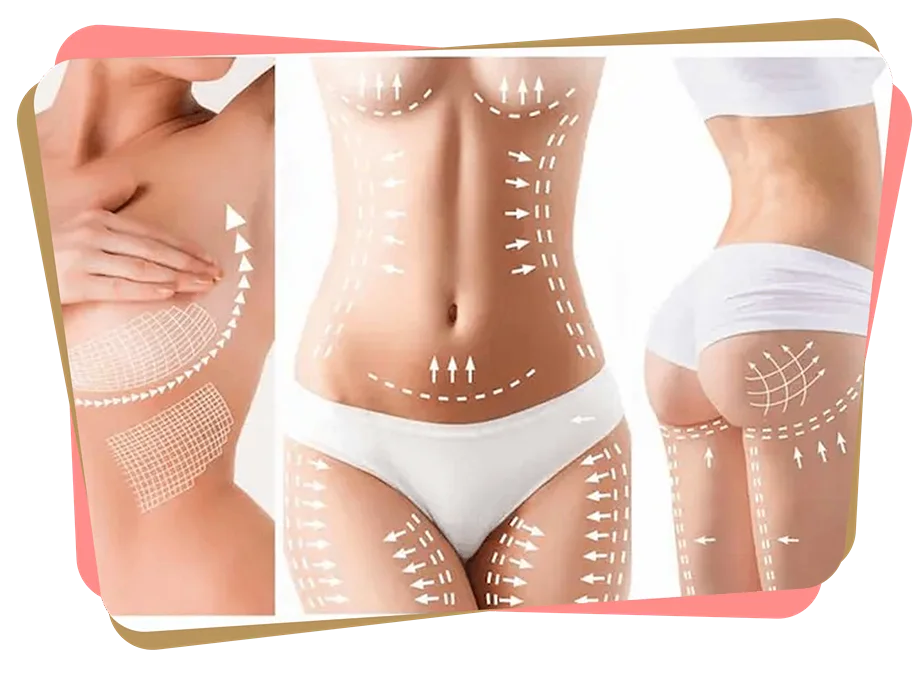
Table of Contents
People usually think about a body lift after significant weight loss or when loose skin starts affecting comfort, movement, or confidence. This surgery helps reshape areas that diet and exercise cannot fix because stretched skin does not “shrink back” on its own.
This page explains the procedure in a calm, clear way so you know what to expect and what decisions matter.
What a Body Lift Really Is
A body lift removes extra skin and fat and tightens the tissues underneath. It focuses on the abdomen, flanks, hips, lower back, and buttocks.
Some patients also need improvement in the upper torso or arms, especially after major weight changes.
It does not change who you are. It helps your body match the effort you have already put in.
Types of Body Lift
Different people need different levels of correction. Your doctor decides which plan fits your skin, shape, and healing capacity.
Lower Body Lift (Belt Lipectomy)
This is the most common option.
It removes extra skin around the waist and lifts the abdomen, hips, outer thighs, and buttocks.
The incision runs around the body but is placed low to hide within underwear lines as much as possible.
Upper Body Lift
Helps people with loose skin on the upper back, chest, or upper arms.
After large weight loss, many patients develop folds in these areas that do not respond to workouts.
Complete Body Lift
For those who need improvement in both upper and lower areas.
It is a larger surgery, planned in stages or done at once, depending on safety, health, and healing capacity.
Patients often ask, “Why can’t we do everything in one sitting?”
Sometimes it is possible. Sometimes not. Your doctor will balance safety with your goals.
Procedures Typically Used for a Body Lift
A body lift is not one single technique.
It is a combination surgery that removes extra skin, reshapes tissue, and may use fat-contouring tools when needed.
Think of it as a skin tightening and reshaping procedure first. Fat removal is secondary.

Below is the breakdown.
1. Skin Excision (Main Procedure)
This is the core of every body lift.
The surgeon cuts away loose, hanging skin and tightens the remaining skin.
This is the only way to fix large folds after major weight loss.
No machine or injection can replace this step.
2. Tissue Repositioning
Under the skin, there are deeper tissues (fascia) that sag too.
Dr. Salil lifts and secures these layers to keep the body’s shape over time.
This helps the abdomen, hips, flanks, buttocks, and outer thighs look firmer.
3. Muscle Tightening (Only If Needed)
If the abdominal muscles are separated (common after pregnancy or massive weight loss), Dr. Salil may repair and tighten these muscles during a lower body lift.
Not everyone needs this step.
4. Liposuction (Optional, Not Mandatory)
Liposuction is often used as a supporting tool to refine shape.
It removes small pockets of fat to improve contour.
Important point:
A body lift is not a liposuction procedure.
But liposuction can help when:
- There are stubborn fat pockets
- The surgeon needs smoother transitions.
- The area must be blended to improve the shape.
5. VASER Liposuction (Optional Tool, Not Standard)
VASER is a type of liposuction that uses ultrasound to loosen fat.
It is not mandatory.
Surgeons use it only when:
- The fat is fibrous or difficult to remove
- They want gentle fat removal with less trauma.
- They need more precision around contour lines.
Many body lifts are done with standard liposuction.
VASER is a choice based on:
- Surgeon’s expertise
- Thickness of fat
- Patient’s healing needs
Who Does Body Lift Surgery in Pune & PCMC at Chrysalis Help
You may be a good candidate if:
You have loose, hanging skin that affects daily life
Your weight is stable.
You are healthy enough for major surgery.
You understand that scars are part of the procedure.
You want smoother, firmer contours rather than dramatic size reduction.
A common worry online is, “Will the scars ruin the result?”
Scars are real, but most patients feel the trade-off is worth it because the loose skin itself is more visible and harder to hide than the scars.
What It Can Do and What It Cannot
It can:
Remove stretched, sagging skin
Improve the shape of the abdomen, hips, buttocks, and thighs.
Lift the lower body and reduce folds.
Reduce skin irritation, rashes, and hygiene issues in skin folds.
Help clothing fit better.
It cannot:
Guarantee perfect symmetry
Act as a weight-loss method
Stop future sagging by adjusting for weight fluctuations.
Remove cellulite fully
Patients often expect a “tight” body right away. The truth is gentler. Results appear slowly as swelling settles and scars mature.
How the Surgery Happens
You will be under general anaesthesia.
Dr. Salil makes incisions based on the areas you want corrected.
Extra skin is removed. Fat may be shaped with liposuction.
In some cases, abdominal muscles are tightened.
Drains may be placed for a few days to prevent fluid build-up.
This is a major procedure. Planning and aftercare matter as much as the surgery itself.
Recovery and Aftercare
Recovery is longer than most cosmetic procedures. Your body needs time to adjust.
Here is what most people experience:
First few days:
- You will need support for basic movements
- Walking is encouraged to reduce blood clots risk.
- Soreness, tightness, and swelling are expected.
First few weeks:
- Light activities only
- Compression garments are worn for support.
- Drains are removed once the fluid has reduced.
- You will need help at home.
Months 2–3:
- Most swelling settles
- You can gradually return to more activity.
Months 6–12:
- Scars begin to fade
- Results become smoother and more defined.
Patients often panic early because the swelling makes them look “bigger.” This settles with time. A body lift reshapes the frame, but healing happens slowly.
Scarring: What You Should Know
There will be noticeable scars. They fade over time but do not vanish.
Dr. Salil places them in low, hidden lines where clothing can easily cover them.
Proper aftercare, sun protection, and avoiding smoking help scars heal better.
How Long Do the Results of Body Lift Surgery Last
Results can last many years.
They remain stable if your weight stays stable.
Large weight changes will stretch the skin again.
Risks and Safety Considerations of Body Lift Surgery at Pune & PCMC at Chrysalis
This is major surgery. Being informed is essential.
Possible risks include:
- Infection
- Bleeding
- Blood clots
- Delayed wound healing
- Seroma (fluid build-up)
- Problems with anaesthesia
- Scarring that remains firm or thick
Smoking increases almost every complication and slows healing. If you smoke, expect your surgeon to ask for a meaningful break before and after surgery.
Costs and Insurance Notes
Costs vary based on:
- Type of body lift
- Extent of skin removal
- Hospital stay
- Anaesthesia
- Post-op care and garments
Insurance rarely covers cosmetic body lifts.
However, if loose skin causes rashes, infections, or hygiene problems, some parts may qualify. You need documentation and clear medical reasoning.
Ask These Questions Before You Decide About Body Lift Surgery in Pune & PCMC at Chrysalis
Ask your surgeon:
What type of body lift do I need?
How long will my recovery realistically take?
Where will my scars be?
What are my personal risks based on my health?
What follow-ups and support are included?
A body lift is as much about preparation and aftercare as it is about the day of surgery.
Choose a clinic where you feel heard and where the plan matches your body, not a template.